










Even our dough needs a break
In addition to a lot of craftsmanship and the best natural ingredients, our bread dough also needs rest – the so-called dough rest, or in technical jargon bulk fermentation. This ensures that your Bachmann bread develops more aroma, stays fresh longer, and is easier to digest.
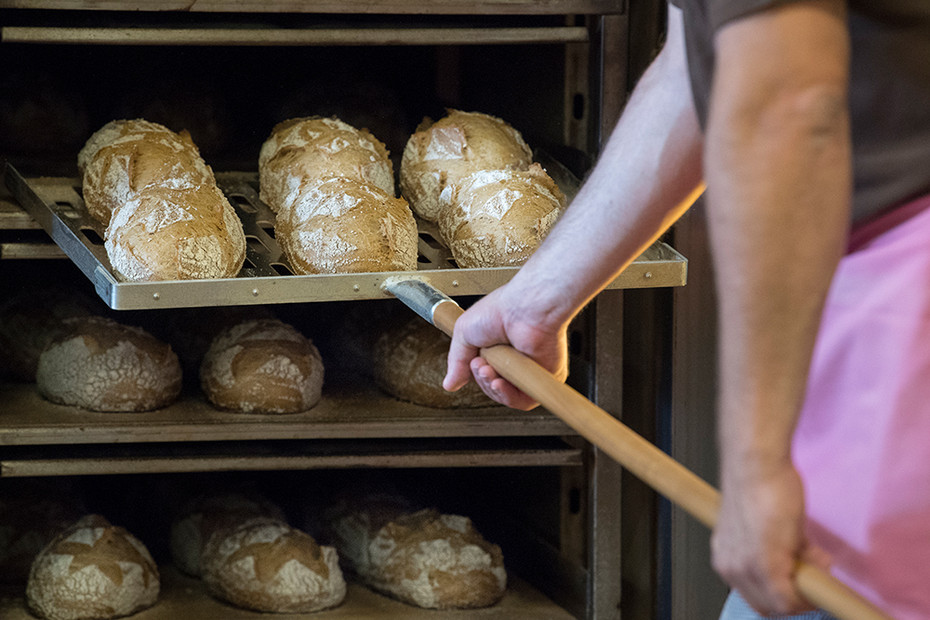

But what exactly is dough rest?
Carsten Rindom, Quality Manager and Head of Production, explains: “It means that the dough rests and matures as one whole piece. This allows it to develop its unique flavor.”
During the dough rest, various breakdown processes take place. The yeast in the bread consumes the starch in the flour until only simple sugars remain. These sugars can then be broken down by the yeast and the beneficial bacteria in the dough, creating amino acids, flavor, and carbon dioxide. The carbon dioxide is responsible, for example, for the bread rising nice and airy during baking.
But it’s not only the flour that changes: gluten is also broken down during the dough rest. This process reduces the dough’s ability to bind water when baking, which is why our Bachmann breads stay fresh for a long time.
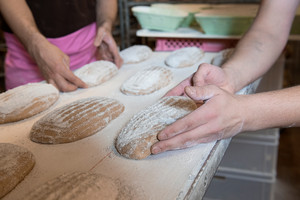
How long does the dough rest and what needs to be considered?
The dough can rest anywhere from 5–6 hours up to 70 or 80 hours. All of our Bachmann doughs rest between 14 and 48 hours, with most resting for 30 hours. The record holders are our Pain Paillasse loaves, with 48 hours of dough rest.
There is no difference in resting time between white and dark bread. However, due to the bran and minerals, dark bread develops a stronger flavor.
But it’s not only the duration of the dough rest that influences digestibility: “The dough must also rest at the right temperature, because only then do we get the optimal balance between lactic and acetic acid,” says Carsten Rindom.
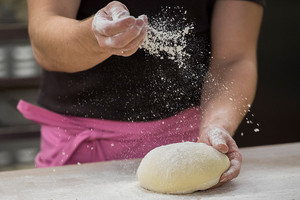
What happens if you don’t give the dough a break?
It’s certainly possible to bake the dough without letting it rest. However, the bread will then be less digestible, less flavorful, and will not stay fresh for as long after baking. In other words, there’s no advantage to too short a resting period. But too long a dough rest isn’t ideal either – the bread can become too doughy, too sour, or the crumb may separate from the crust.
5 Benefits for Our Customers from Dough Rest
The longer the dough rests, the more…
… the more nutrients your body can absorb from the bread
… the bread stays fresh
… the juicier the bread is
… the more aromatic the bread is
… the easier it is to digest